Kentucky Derby Record: Churchill Downs Hits $980 Million Quarterly Revenue
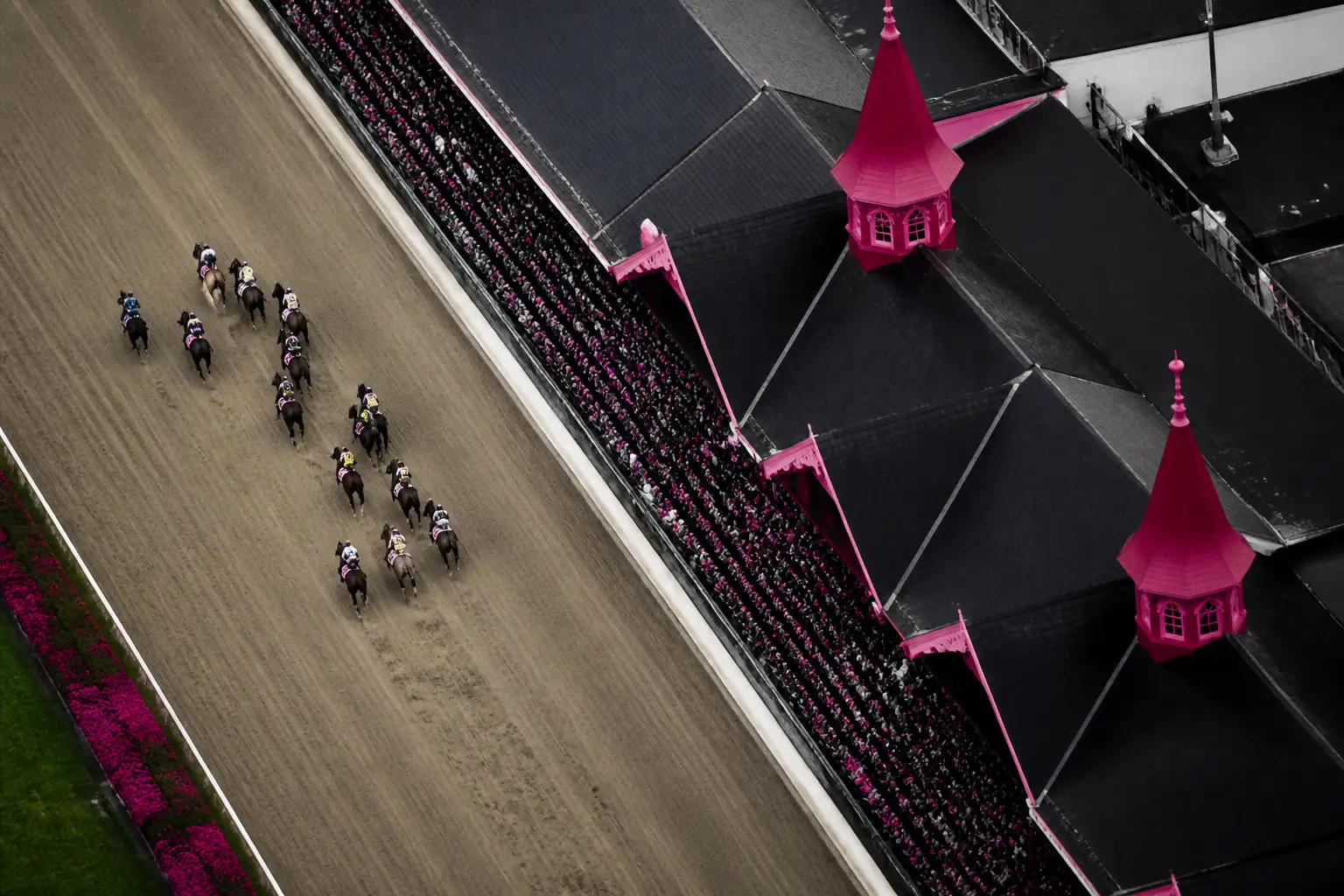
Churchill Downs reports a record $980 million in second-quarter revenue, driven by historic viewership and wagering during the 152nd Kentucky Derby week.
Churchill Downs Inc. has delivered a powerhouse performance for the second quarter, reaching a milestone revenue of $980 million. This figure marks a significant $46 million increase compared to the same period last year. The backbone of this success was undoubtedly the 152nd Kentucky Derby week, which demonstrated the enduring commercial appeal of elite horse racing. Beyond the track, the company is successfully diversifying through its Historical Racing Machine (HRM) operations, which continue to show strong momentum across several key states.
Financial metrics across the board showed positive trends. Net income reached $241 million, up 11 percent year-over-year. The Adjusted EBITDA, a crucial indicator of operational efficiency, rose to $477 million. This record-breaking profitability highlights the company's ability to maximize revenue from sponsorships, licensing, and ticketing, especially during high-profile events that capture national attention. The strategic move to air the Kentucky Oaks in primetime for the first time contributed to this surge, drawing 2.4 million viewers and record wagering levels for that race day.
Numbers and facts
The revenue growth was largely fueled by a $21 million increase from the Churchill Downs Racetrack itself. This was bolstered by higher NBC broadcast revenue and a surge in sponsorship deals. Viewership for the Derby peaked at 24.4 million, a 12 percent jump from the previous year. Average viewership also remained strong at 19.6 million. In the HRM segment, Kentucky venues added $12 million to the top line, with Southwestern Kentucky locations showing a $5 million net gain. This offset a $4 million decrease in Central Virginia, where increased local competition put pressure on margins.
Operational shifts also impacted the results. In New Hampshire, Adjusted EBITDA fell by $2 million due to the planned closure of the temporary Casino Salem as the company prepares to open the Rockingham Grand Casino. Additionally, the cessation of HRM operations in Louisiana in May 2025 led to a $2 million decrease. However, strong performance at the New York gaming properties helped mitigate these localized declines. Churchill Downs shares closed at $88.53 on the Nasdaq, reflecting a minor 0.8 percent dip despite the record-breaking operational results.
"Net income was $241 million, an increase of $24 million, or 11% year-over-year. The Adjusted EBITDA of $477 million also set a quarterly record." - Rege Behe, CDC Gaming Analyst
Why it matters for German players
For residents in Germany, the massive scale of US operators like Churchill Downs serves as a reminder of the global nature of the gambling industry. However, the regulatory environment in Germany remains far more restrictive than in the United States. Under the 2021 Interstate Treaty on Gambling, German players must adhere to strict protection measures that are not present in the American market. This includes the mandatory 1,000 Euro monthly deposit limit and the 1 Euro per spin cap on virtual slot machines. These rules are enforced by the Gemeinsame Glücksspielbehörde der Länder (GGL) to prevent gambling addiction and ensure a safe environment.
While US firms celebrate record wagering volumes, German law focuses on moderation. It is essential for German players to only use platforms listed on the official GGL whitelist. Using offshore sites from jurisdictions like Curacao or the MGA might seem appealing due to the lack of limits, but they offer no legal recourse or player protection mechanisms provided by German authorities. The transparency seen in Churchill Downs' financial reporting is what the GGL aims for in terms of operator integrity within the domestic market.
What it means for GGL-licensed casinos
The success of Churchill Downs illustrates that integrating high-quality sports content with betting opportunities remains a winning formula. GGL-licensed operators in Germany can look at these results as proof of market potential, even if the regulatory framework here is more stringent regarding advertising and product cross-selling. The rise of Historical Racing Machines in the US also points toward a growing interest in hybrid gaming products, though any such innovation in Germany would require extensive review by the GGL to ensure compliance with social concept requirements and the LUGAS monitoring system.
Sources & further reading
- Joint Gambling Authority of the German Federal States (GGL): gluecksspiel-behoerde.de
- Whitelist of permitted online operators: GGL-Whitelist
- BZgA problem-gambling helpline: 0800 1 372 700 (free, anonymous, 24/7)
- Editorial methodology: Editorial guidelines Lustich.de
 United States
Gambling can be addictive. Please play responsibly. Help and counselling at 0800 1 372 700 (BZgA, free & anonymous).